From the Canadian Press
An Ontario farmer who operates a raw milk co-op was found not guilty Thursday of 19 charges related to selling unpasteurized milk.
Michael Schmidt, from Durham, Ont., defended himself in 2009 against the charges for dispensing milk straight from the cow.
While raw milk is legal to drink, it's illegal to sell in Canada.
Schmidt's legal battles sparked a heated debate over the safety of raw milk. Advocates have extolled its flavour and health benefits, while health officials and the province's milk marketing board, the Dairy Farmers of Ontario, have argued raw milk isn't fit for widespread distribution.
The farmer argued the charges laid against him under the Health Protection and Promotion Act and the Milk Act are unconstitutional and infringe on his rights and freedoms.
Schmidt operates a 150-cow share raw milk co-operative venture, which allows members to own a portion of the cow to acquire raw milk.
At trial in Newmarket, Ont., earlier in the week, Schmidt argued that government officials and food scientists cannot guarantee the safety of any food, and suggested informed consumers should be able to buy raw milk.
Schmidt has stood by his actions since health officials carried out an armed raid of his farm in November 2006 and seized his milking equipment.
"The rich and sweet taste of unpasteurized milk would blow most people away," Schmidt has said. "I bet that 90 per cent of the people who would have the choice by blind tasting would all go for raw milk because that is the taste of milk and not what you buy on the shelf."
A private member's resolution to create an all-party task force to examine the issues surrounding raw milk was debated but not passed in the Ontario legislature on Dec. 7.
Friday, January 22, 2010


Wednesday, January 13, 2010
Food For Thought: Avoid These 7 Foods and You're Off To A Healthier New Year
Posted by: Dr. Mercola
1. Canned Tomatoes
The expert: Fredrick vom Saal, PhD, an endocrinologist at the University of Missouri who studies bisphenol-A
The resin linings of tin cans contain bisphenol-A, a synthetic estrogen that has been linked to ailments ranging from reproductive problems to heart disease, diabetes, and obesity. Acidity -- a prominent characteristic of tomatoes -- causes BPA to leach into your food.
2. Corn-Fed Beef
The expert: Joel Salatin, co-owner of Polyface Farms and author of books on sustainable farming
Cattle were designed to eat grass, not grains. But farmers today feed their animals corn and soybeans, which fatten up the animals faster for slaughter. A recent comprehensive study found that compared with corn-fed beef, grass-fed beef is higher in beta-carotene, vitamin E, omega-3s, conjugated linoleic acid (CLA), calcium, magnesium, and potassium.
3. Microwave Popcorn
The expert: Olga Naidenko, PhD, a senior scientist for the Environmental Working Group
Chemicals, including perfluorooctanoic acid (PFOA), in the lining of the bag, are part of a class of compounds that may be linked to infertility in humans. In animal testing, the chemicals cause liver, testicular, and pancreatic cancer. Studies show that microwaving causes the chemicals to vaporize -- and migrate into your popcorn.
4. Nonorganic Potatoes
The expert: Jeffrey Moyer, chair of the National Organic Standards Board
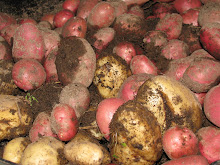
Root vegetables absorb herbicides, pesticides, and fungicides that wind up in soil. In the case of potatoes they're treated with fungicides during the growing season, then sprayed with herbicides to kill off the fibrous vines before harvesting. After they're dug up, the potatoes are treated yet again to prevent them from sprouting.
5. Farmed Salmon
The expert: David Carpenter, MD, director of the Institute for Health and the Environment at the University at Albany
Nature didn't intend for salmon to be crammed into pens and fed soy, poultry litter, and hydrolyzed chicken feathers. As a result, farmed salmon is lower in vitamin D and higher in contaminants, including carcinogens, PCBs, brominated flame retardants, and pesticides such as dioxin and DDT.
6. Milk Produced with Artificial Hormones
The expert: Rick North, project director of the Campaign for Safe Food at the Oregon Physicians for Social Responsibility
Milk producers treat their dairy cattle with recombinant bovine growth hormone (rBGH or rBST, as it is also known) to boost milk production. But rBGH also increases udder infections and even pus in the milk. It also leads to higher levels of a hormone called insulin-like growth factor in milk. In people, high levels of IGF-1 may contribute to breast, prostate, and colon cancers. [both are banned in Canada, Europe and Australia]
7. Conventional Apples
The expert: Mark Kastel, codirector of the Cornucopia Institute
If fall fruits held a "most doused in pesticides contest," apples would win. And increasing numbers of studies are starting to link a higher body burden of pesticides with Parkinson's disease.
Tuesday, January 12, 2010
Thinking Outside the Box
An interview with Helena Norberg-Hodge on the need for a
"systemic shift toward localizing economic activity"
January 2010 By David Barsamian
http://www.zmag.org/zmag/viewArticle/23524
Helena Norberg-Hodge is a native of Sweden, a leading critic of conventional
notions of growth and development, and the recipient of the Right Livelihood
Award, also known as the Alternative Nobel Prize. She is also the founder and
director of the International Society for Ecology and Culture and the author
of Ancient Futures: Learning from Ladakh.
BARSAMIAN: The existing economic model of globalized capitalism is reeling,
but there is really no alternative that we can turn to and say, "Okay, tried
that, didn't work. Let's try this."
NORBERG-HODGE: I disagree. I think there is a systemic alternative that is
being discovered and actually developed at the grassroots. But this
alternative, which is a systemic shift toward localizing economic activity
instead of globalizing it, has received almost no air time. It's a sort of
invisible growth, but it's happening nevertheless. Fundamentally, what that
shift is about is recognizing that this global economic system has its roots
from 500 years ago, when elites in the UK and Europe started sending people
across the world to gather wealth for themselves.
Structurally, they were destroying more self-reliant, localized economies
where people were meeting their own needs and producing a range of things for
home and regional needs. Trade was in the hands of smaller communities and
groups exchanging with each other. When they were forced into the mines or
onto giant cotton, sugar, coffee, and tea plantations, there was a shift
towards not only an economy that was very exploitative and unjust, but also
ecologically unstable because monocultural production inherently works against
the diversity of the natural world. Diversified production in localized
economic systems works with nature.
You don't think advocating localization opens you up to claims that it's
quaint and romantic, but not realistic?
It's a tragedy that often people can't conceive of smaller-scale
units—particularly in places like America. In Europe it's a little bit
different. In Europe you have a fabric of smaller towns, smaller farms, more
localized economies. But there, too, the corporate pressure has shifted
everything in the wrong direction. We have to do what we can to get people to
see that many small can be more efficient and more productive than one big. If
you take the number of McDonald's restaurants around the U.S. and imagine what
they would be like if, instead of being owned by a giant corporation, they
were family-owned in that locale. Why couldn't that work? Why is that
unrealistic? So many people who have had the experience of going into a
family-owned restaurant know how much more delightful it is, how much higher
the quality is.
I remember hearing José Bové, the farmer in France who was one of the
resistors to the World Trade Organization, using the term McDominacion, the
French term for McDonaldizing the world.
It's similar to another term being used, Coca-Colonization. This large-scale
production and consumption controlled by giant corporations means enforcing
bigger and bigger monocultural production on the land. The only block between
improvement and what we have today is what's in our heads. There is a huge
amount of propaganda against the notion that more localized, diverse food
systems can feed the world.
But the so-called efficiency of modern economics creates unemployment. To
deprive people of the opportunity to work and to shove them into giant slums
is probably the major human rights issue today.
The ideal farm is an Old MacDonald's farm, where you have a range of animals
as well as grains and vegetables. What you get are cycles of production and
reproduction that are completely self-sustaining. In order to really make them
productive, we need more labor on the land. If we labor is freed up to do the
really important work that's needed, we would be able to reduce our ecological
footprint while simultaneously increasing employment and productivity. This is
a magical formula.
The local food movement is growing around the world. You have CSAs
(community-supported agriculture) in many parts of the world. But in the long
run, we need local shops and local permanent structures where food and even
processed food can be produced and sold to local communities.
In this process we're finding that on the farm, as farmers shift away from
producing for the corporate long-distance market, they are increasing the
diversity on their land. I was talking to a farmer in Australia and he was
saying basically he felt like a serf, serving anonymous bosses that were
always demanding more and more of the same thing in a standard size, which, of
course, goes against nature. You don't produce exactly the same size bananas
or apples if you work with nature. He said that, after only two years of
selling in a farmers' market, his work has become enjoyable and he is having
contact and exchange with the consumers. He's gone from 2 products to 20 in
just a couple of years. This is a typical story. If people could both imagine
and, ideally, take the time to visit some farms, I think we could see a really
powerful movement for policy change in this regard.
There is an attendant crisis in the U.S. of contamination. There have been
tomato scares, spinach scares, beef has been recalled. Does that go on in
Australia as well?
Absolutely. We know from our research that the long distances inherent in this
corporate globalized system mean that food poisoning has escalated
dramatically. You have food that's been prepackaged in plastic and then
reheated in microwave ovens. This way of preserving food is a disaster, and
it's known to increase the bacterial activity.
When you study almost any production in this global food system, you end up
feeling that you can't eat it. Strawberries get sprayed with 26 different
types of pesticides. The mercury in fish is a huge threat. Fish farming is
responsible for poisoning the life in the sea to such an extent that, exactly
as with the industrial farming on land, it kills everything around it.
I can understand the localization applicability in the global South where the
growing season is much longer. What about the North where the growing season
is very short?
It's remarkable how much can grow and how the growing season can be expanded
with smaller-scale greenhouses. You can extend the growing season from 4
months a year to 11 months and do it in a very healthy and sustainable way. We
introduced solar greenhouses in Ladakh [India] and now you can have fresh
greens in the middle of winter. Because you can start seedlings earlier, you
can have tomatoes and artichokes, asparagus, virtually everything you can imagine.
Almost everywhere I go in the world, even in the industrialized world, people
have a memory of how there used to be orchards of the most delicious fruits
and berries, black currants, raspberries, and strawberries. That wealth of a
diversified production, incredible richness, could still be re-established.
You can make fruit leathers, just drying the fruit and preserving it, which
will preserve a lot of vitamin content.
It seems in order to achieve the outcome that you've been outlining we need a
kind of decolonization of the mind.
We now have a centralized, top-down system that is essentially rewriting
histories. We have a propaganda system that extends into our schoolbooks, even
the kindergarten books that are being produced, scientific research, media.
Almost every access that we have to information is being shaped by for-profit,
corporate interests. Many scientists who are now enlisted in what has become
industrial scientific production of food have no idea of the end result: dead,
colored, irradiated food that has no nutritional value. So the inability to
see the impact of what we do is one of the biggest tragedies of this system.
In villages in the Third World, people have the opportunity to build a house
from local materials, to produce food from the land, and, through community
relationships, to have a very rich culture. But in the communities that are
among the richest in that way, for instance, Bhutan and Ladakh, these
countries, on paper, will be described as the poorest of the poor.
And going in and giving someone a loan and getting them to produce fashion
clothes for an elite, even if they're only earning a dollar a day, will look
like progress, because we've become totally illiterate about understanding
what constitutes real wealth.
Ladakh, although part of the Tibetan plateau, is part of India politically.
You've been tracing Ladakh's evolution since you first went there in 1975.
What can people learn from Ladakh?
In a way, the most important lesson is that rebuilding the community fabric is
a prerequisite for a healthier and happier society and for healthier and
happier individuals. As it turns out, it's also a recipe for healthier and
happier economies that are truly sustainable, because they're adapted to the
living world and to diversity.
We all want to be seen, recognized, heard, connected to one another. The
tragedy of the modern economy is that it has succeeded in separating us from
one another. It's doing that in a multitude of ways. One of them is that the
modern media presents children with completely unrealistic role models.
They're comparing themselves to these one-dimensional images of perfection.
This is having this enormous effect in the global South. In places like
America the demand from young children for plastic surgery is skyrocketing.
The self-rejection and self-hatred is translating into bulimia, anorexia, drug
abuse, antidepressants. In most industrialized countries now there is talk of
an epidemic of depression. In the UK in 2008, 36 million prescriptions for
antidepressants were made out. That's in a country of 60 million people.
Tell me about your film, The Economics of Happiness, and the International
Society for Ecology and Culture.
The International Society for Ecology and Culture (isec.org.uk) is my NGO. We
are unusual because we've been working internationally for about 30 years. We
have small offices and branches in France, Germany, the U.S., Australia, and
Ladakh. We are working with other groups, especially in Thailand, Korea, and
Japan. Our main focus is to try to raise awareness about how we can shift from
this globalizing path to localizing one.
We developed something called a local food toolkit, which was a way of helping
to train local food activists. We have had programs where we sponsor reality
tours to the North so they can see that this life is not what it looks like in
the media, that there are serious environmental and social crises.
Equally, we have a program where foreigners come and live in a village in
Ladakh for a month in the summer and we do workshops on these issues. That's
also been very effective for training activists in the West. We also put
together about 20 years ago a curriculum that we call the Roots of Change that
examines what's happened over the last 500 years at this fundamental level,
again, of the globalizing versus the localizing path.
The film lays out these arguments in an hour-long documentary. We've tried to
show it from a global point of view. We have voices from every continent, and
we hope that it will be a useful tool for communities around the world.
David Barsamian is the founder and director of Alternative Radio. He is the
author of numerous books with Noam Chomsky, Howard Zinn, Tariq Ali, and Edward
Said. His latest books are What We Say Goes and Targeting Iran.
--
Monday, December 7, 2009
WOMEN IGNORED IN CLIMATE CHANGE DEBATE AT COPENHAGEN
By Wayne Roberts
Women hold up half the sky, claims an old saying, coined long before the world’s skies were filled with global warming gases. My sense is that from now on, they will have to hold up a lot more.
The absence of debate on this gendered slant to global warming is a silence piled upon silences in the warm-up to the December Copenhagen conference, where the world’s leaders will, with some fanfare, agree to do nothing positive of substance.
Women, especially women in the Global South (aka the developing world), do almost nothing to cause global warming. They keep the homefires burning in India, for example, the country with the highest percentage of the world’s poor; produces about the same amount of global warming gases as affluent Canada, which has about a billion fewer people.
Women are not causing the delays in scientists getting their act together, nor the logjam in government inability to coordinate anti-warming initiatives. The much-heralded IPCC report of 2007 presented the consensus of some 2500 scientists around the world. They agreed global warming had human causes and would cause planetary havoc, and spent half a page on special problems women would face, perhaps not surprising given that only 15 per cent of the included scientists (which presumably didn’t include their secretaries) were women. As for governments, less than a quarter of the negotiators working on a Copenhagen deal right now are women.
Yet women will pay most dearly for business and political notion-of-motion inaction, a reality which the world’s mainstream feminists and environmentalists, even such organizations as Moms Against Climate Change, have all but ignored.
The silence about women is help up by many silences that lead many people to think that global warming is some future threat or that it may disrupt Nature, but not people. According to the May, 2009 Lancet, Britain’s most respected medical journal, global warming is the “biggest global health threat of the 21st century” and also “one of the most inequitable health risks of our time” since the poorest billion people in the world will lose 500 times more years of healthy life than the rich who caused their problems. This is the century when colonialism loses all pretence of being a white man’s burden and becomes, especially in southern Africa and Asia where the harm will be worst, a brown woman’s burden. And it’s already happening; indeed, it’s ten year-old news.
Global warming’s impact is a future or distant reality only in the Global North. In the South, global warming-related or man-made “natural disasters,” such as hurricanes, typhoons, floods and mudslides are already on the rise. Small disasters are silent tsunamis, since they lack the drama of a big one, but they have doubled from 200 to 400 in the last 20 years, according to reports by the UN’s Division for the Advancement of Women. These mini-disasters led to the death or maiming of 211 million people, seven times more than were wounded or killed in wars over that time. Women and children are 14 times more likely to die during disasters than men, according to the UN’s because they’re more likely to be trapped in a home, or were never taught to swim or climb trees, or wear clothes that make vigorous movement difficult, according to the UN’s recent publication, Gender in Agriculture Sourcebook.
Just as there is silence about natural disasters, many provoked by climate chaos, there is silence about women’s role as hewers of wood and water, whose work will never be done in a heated- and dried-up world.
The fuel for about a third of the world’s homes -- two-thirds in India or Indonesia -- is wood or dung gathered and carried by women. Women also find and carry home cooking and cleaning water. In Africa, already suffering from deforestation and desertification induced by climate chaos, women and children now spend 40 billion hours a year gathering water, which commonly requires them to carry a 20 to 40 kilogram load on their heads, leading to spinal injuries as they age, according to a report to the UN General Assembly last spring.
As the time and distances go up under the impact of increased desertification – almost two billion people are liable to suffer from water stress by 2025 as a result of expected levels of climate chaos – the sheer time required to carry out these essential tasks will make it almost impossible for girls to attend school or women to engage in part-time jobs that might ease the way out of extreme poverty.
Time required searching for essentials such as fuel and water also competes for time needed to maintain subsistence farms, the women’s work that provides most of the food eaten in the Global South. Just when that food production becomes more time-demanding as adaptations become necessary to ward off drought, desertification and deforestation; crop failures and famine are almost inevitable in such circumstances. Extreme poverty, farmland degradation, hunger and malnutrition, sexist discrimination and global warming will form points on an enclosed and vicious circle from which escape will be difficult.
Nobel Peace prize winner Wangari Maathai, honored for building a women’s army of tree planters who grew greenbelts throughout Kenya, has warned that the world is unlikely to achieve climate equity until it achieves gender equity.
If ever there was a cause to form a new non-profit or Non Government Organization, this is it. As Copenhagen will surely confirm, when the most vulnerable and are without voice, there is no-one to challenge the political and corporate bullies now imposing an additional historic burden on the health, well-being and rights of over a billion women.
(adapted from NOW Magazine, December 3-9, 2009; Wayne Roberts is the author of the No-Nonsense Guide to World Food)
- - - - -
Foodforethought provides information and analysis to encourage dialogue and exploration of innovative trends in the global food system. The service is managed by James Kuhns, in collaboration with Wayne Roberts.
Food security can’t wait, neither can action on climate change
By FAO, United Nations
Reduce emissions, remove greenhouse
gases and ensure food security
According to the 2007 Synthesis Report of the Intergovernmental
Panel on Climate Change (IPCC), the agriculture and forestry sectors
are responsible for a third of green house gas emissions (GHG) and
yet these same sectors also hold an enormous potential to reduce
emissions and also absorb carbon in vegetation and soils.
Agriculture can be part of the mitigation solution and the sector
deserves to be anchored in the implementation of international
agreements. Reducing the environmental footprint of agriculture
while meeting the growing demand for food, fuel and fiber can be
done.
Some mitigation options, particularly those related to soil carbon
sequestration can contribute to both food security and adaptation
goals. Reduction and removal of carbon can also be achieved by
improving cropland and grassland management, and restoring
degraded soils.
Around 13 million hectares of forests are lost annually due to
deforestation causing 17 percent of global GHG emissions (FRA
2005, IPCC 2007). Reducing Emissions from Deforestation and forest
Degradation (REDD) including sustainable forest management, forest
conservation and enhancement of forest carbon stocks also
can be an immediate answer.
Get it right
Adapt food systems to climate change
As the number of hungry in the world surpasses one billion, ensuring
adequate safe and nutritious food for all will require food systems to
adapt to climate change. Adaptation of the agriculture, forestry and
fisheries sectors to climate change will be costly but necessary for food
security, poverty reduction and ecosystem services.
Acting now rather than later could reduce the vulnerability of
hundreds of millions of farmers, and forest-dependant people who are
already food insecure especially smalholder and subsistence farmers,
pastoralists and fisherfolk, women and indigenous peoples.
No other sector is more sensitive to climate change than
agriculture and no other sector contributes so directly to the provision
of food and livelihoods of the majority of the poor in developing
countries. That’s why specific targeting of agriculture within adaptation
efforts, and their financing, is needed so that the sector can achieve its
multiple roles.
Concrete steps to face future risks of climate change impacts
include developing climate change impact assessments, encouraging
better water management, soil conservation, resilient crops and trees
and improving weather and climate forecasting as well as further
developing disaster risk management.
Capture synergies between food
security and mitigation
Potential synergies among food security, adaptation
and mitigation from land-based practices in developing
countries could generate high benefits to address the high
demands placed on these sectors.
However, some mitigation actions may not help
adaptation efforts and can sometimes conflict with food
security goals. Strategies and financing mechanisms will be
needed that enable these multiple benefits to be produced
and used by rural producers.
The most promising mitigation options include:
sustainable forest, cropland and rangeland management,
agroforestry, and restoration of degraded and organic soils.
Tuesday, December 1, 2009
Todmorden's Good life: Introducing Britain's greenest town
'Grow your own' fever has gripped the Pennines community, which is aiming for self-sufficiency
By Joanna Moorhead
Sunday, 29 November 2009
It's an ordinary small town in England, but its residents claim they've discovered the secret that could save the planet. And with world leaders preparing to gather in Copenhagen in just over a week's time to debate how to do just that, the people of Todmorden in the Pennines this week issued an invitation: come to our town and see what we've done.
In under two years, Todmorden has transformed the way it produces its food and the way residents think about the environment. Compared with 18 months ago, a third more townspeople now grow their own veg; almost seven in 10 now buy local produce regularly, and 15 times as many people are keeping chickens.
The town centre is dotted with "help yourself" vegetable gardens; the market groans with local meat and vegetables, and at all eight of the town's schools the pupils eat locally produced meat and vegetables every lunchtime.
"It's a complete turnaround," said Pam Warhurst, a former leader of Calderdale Council, board member of Natural England and the person who masterminded the project – called Incredible Edible – and motivated her friends and neighbours to join in. "Our aim is to make our town entirely self-sufficient in food production by 2018 – and if we can carry on at the same rate as we've done over the past 18 months since we had our first meeting and set this initiative up, we're going to make it."
And the scheme's leaders are now hoping to export their idea: two weeks ago the town held a conference on how to make Incredible Edible-style initiatives work elsewhere, and more than 200 people from across Britain attended.
They heard the story of Todmorden's transformation, starting with what Ms Warhurst calls the "propaganda planting" of vegetables around the town centre 18 months ago. Nick Green, who runs a converted mill that provides workspace for local artists, took on the job of doing the planting. He said he chose the first venue – a disused health centre – because it was in the middle of the town and would attract plenty of attention. "We wanted everyone to see what we were doing, so they could ask questions and ultimately join in," he said. "The old health centre has plenty of land in front, so it was ideal. I didn't ask anyone's permission: I just went there with my spade and my seeds and I planted cabbages and rhubarb."
Incredible Edible was originally funded out of the participants' own pockets. "We were very clear that we didn't want to look at what grants were available and mould our projects to suit them," said Mr Green. "We felt that what would work was to start with the town and what it needed. We'd look for money later on." What the project leaders found was that a lot could be achieved with small amounts of cash. And awards and grants have followed – the latest is the Kerrygold Farmers' Co-operatives Awards last week, when Incredible Edible won the "most inspirational community project" and £1,000.
One of the founding principles of the movement has been to make it as inclusive as possible; in this it differs from transition towns, said Ms Warhurst. "We are working with people who would find transition towns hard to identify with. Our project is all about finding the lowest common denominator, which is food, and then speaking in a language that everyone can understand. Plus we don't have strategies; we don't have visiting speakers; we don't have charters and documents. We just get on with things: this is all about action."
The project has been moulded to fit with where people in Todmorden are and the lives they lead. Many live in homes without gardens, and the local social housing landlord, Pennine Housing, has given out more than 1,000 starter packs of seeds and growing troughs, and invited tenants to cooking and gardening classes. "There are people here who don't own a recipe book and who don't have a garden, but we want to show them that they can still cook and grow vegetables," said Val Morris, the tenant involvement officer for Pennine Housing.
Other town-wide initiatives include a foraging course, on which participants learn how to find food for free, and then how to make preserves, jams and chutneys with their findings – and, more controversially, a workshop on how to kill and pluck your own chickens. "It's not for the faint hearted, but there's something entirely honest and right about killing the chickens you're going to eat," said Lynne Midwinter, a physiotherapist in the town who took her eight-year-old daughter along. "For my daughter, it's entirely normal to see chickens being killed and to help pluck them. "Some parents might think you can't let your kids see that, but what I'd say is, what kind of a life did the chickens your child usually eats have? Our chickens have a good life; they die a quick death, and seeing all that teaches the connection between rearing animals and eating them, which has been lost in much of the Western world today."
Ms Midwinter has also helped persuade local businesses to support Incredible Edible. "One of our early initiatives was to give all the stalls in the covered market a blackboard on which they could advertise any local food they were selling, to encourage them to sell more local food and to shout about it when they did," she said.
"And it's definitely worked. You now see most of the stalls advertising the fact that they're selling local beef and lamb, pork and bread, vegetables and even cheese – the first-ever Todmorden cheese, which is called East Lee, is now produced by the Pextenement Cheese Company at a farm on a hillside above the town."
Another venture has been the planting of apple, pear and plum trees at the town's newly built health centre. "The PCT was all set to grow the usual prickly bushes around it, and we said – hold on a second, why not food?" said Ms Warhurst. "They agreed, and we're going to encourage people to pick their fruit whenever they're passing the doctor's. Apart from giving them fresh fruit, maybe putting the trees there will help people make the connection between healthy eating, and being healthy."
Other projects in the pipeline include a 50m-long polytunnel being set up to grow bigger amounts of food and vegetables on a site just outside the town, a drop-in jam-making centre, a woodwork shop to supply chicken huts and greenhouses, and a vegetable garden at elderly people's care homes in the area which will be designed so that residents will be able to garden and pick vegetables from their wheelchairs.
There are also two herb gardens, one beside the main road and one at the new health centre. "Anyone can pick the herbs. They're a great way to get people enthused about cooking," said Helena Cook, who looks after the gardens.
She is also involved in trying to infect other local communities with the Incredible Edible spirit. "I'm a primary school teacher in a neighbouring town, Littleborough, and I've set up an Incredible Edible growing project with my pupils," she said. "The great thing is that it pulls the parents in as well, and I know some of them have already started growing their own vegetables at home. All of us who are involved in the Todmorden project try to export it to other neighbourhoods we have contact with."
The next project on the horizon is a fish farm that's being set up on land adjacent to the high school. Incredible Edible has applied for a lottery grant of £750,000 to set the farm up, and Ms Warhurst says she's confident their bid will be confirmed soon. There are also plans to offer a diploma in environmental and land-based studies to 14 to 19-year-olds, using local growing and food production initiatives as a resource. "That's fantastic because it's making our school a centre of excellence at teaching this vital skill – and it's kids who go into this kind of work who are going to be most useful to the world of tomorrow," said Ms Warhurst.
"The vital thing about Incredible Edible, and the thing that sets it apart, is that it involves everyone in the town and it's genuinely a grass-roots project. I honestly believe it's a blueprint for every neighbourhood. What we're doing here could easily be rolled out anywhere. It's all about involving people, giving them ownership, letting them realise it can be fun and interesting and that the food is delicious, and giving them space to set up their own ideas and run with them."
Ms Warhurst and the rest of the Incredible Edible team are now looking forward to their Christmas treat – a home-cooked dinner of turkey and all the trimmings in a local church centre, with every ingredient sourced locally. "We're growing the potatoes and sprouts on a special piece of land we call the Christmas dinner patch," said Helena Cook. "All the food, including the turkey, will be from Todmorden.
"There are even crumbs from locally baked bread, and local fruit, in my secret recipe Christmas pudding!"
SJ Clegg, 42
Smallholder
"Three years ago I gave up my job as a designer in London and moved to a converted barn above Todmorden to run a smallholding. So I was already here and keeping my own pigs, sheep, chicken and goats, but Incredible Edible has given a huge boost to what I do because it's made people in the town so much more aware of issues around locally produced food. The eggs I sell, for example, aren't watery like a lot of supermarket eggs: they've got big, orange yolks. And, perhaps most surprising of all, they're cheaper."
Pauline Mullarkey, 39
Mother of three
"I'd never grown a vegetable in my life and I had absolutely no idea how to do it, but when I heard about Incredible Edible from another mum in the school playground I knew it made sense. I started in my own garden by growing vegetables. It was far easier than I'd expected it to be. This year we've had potatoes, leeks, carrots, cabbage, strawberries, onions, garlic, peas, parsnips and sprouts, and I don't spend more than two hours a week in the garden.
"I also keep chickens. I've now got 15, and I'm currently putting together a map of everyone in the town who has them. The eventual aim is for every egg consumed in Todmorden to be a local one. We're working towards producing 30,000 eggs a week, and it's entirely possible that by 2018 our egg production will be at those levels. And people catch on quick – you often hear people in shops asking for Todmorden eggs."
Tony Mulgrew, 46
Catering manager at Todmorden High School
"There was some wasteland beside the school and one day I looked out at it and thought, we could grow the vegetables for the school dinners on that! I asked the governors, they agreed, and we started growing in February 2009. Year 8 and Year 10 pupils helped, and by the summer term we were able to serve tomato soup made from our tomatoes, as well as potatoes, courgettes, runner beans, lettuce, endive and chard.
"The fruit was amazing – we had blueberries, gooseberries – and the strawberries went on for ages. What was really good was the pride the pupils took in seeing the food they'd helped produce on the menu in the school dining room. I also source all our meat from local farms. I'd say that all the meat we serve here is produced within a half-hour's walk from the door. Plenty of top restaurants can't make that boast."
Nick Green, 52
Sculptor and owner of local mill that provides workspace for other artists
"In April 2008 they told me: you're our guerrilla gardener! So off I went and started planting vegetables. I started with rhubarb because the great thing about it is that people recognise it, so they know when it's ready to pick. At that stage I put up a sign inviting people to pick whatever they wanted to take home. And people did. We wanted to show that it's a project for anyone, that it's about ownership for the whole community.
"I've now got lots of food growing all over Todmorden – chard and kale as well as rhubarb – and we've recruited people from the mental health inclusion scheme to help with the planting. That's been a good move because people with mental health problems appreciate the chance to do meaningful work, and what could be more meaningful than growing food for the whole community?"
New GMO Food Additives To Be Introduced Without Full Safety Appraisal
By NISHOREN
On September 14, 2009, two new food additives from Ajinomoto were judged to be “safe” by the Expert Committee for Genetically Modified Food and Others at the Food Safety Commission (FSC). The appraisal was open for public comments and it seems likely that the two novel amino acids will be approved by the Ministry of Health, Welfare and Labour by the end of November.
So far, several GMO food additives have been approved, but they were basically used for food processing, as in the case of enzymes like alpha amylase for improved productivity. There have been no cases of GMO food additives that are used directly as seasoning as is the case of amino acids. Thus, when Ajinomoto first submitted these GMO products, there were no established method for safety appraisal.
That was why the Food Safety Commission has published a “Directive for safety assessment of food additives which are produced using genetically modified micro-organisms and which are highly refined and have non-protein characteristics, including amino acids.” (Many studies have verified that the process of genetic engineering can produce unpredicted toxins or allergens.)
The two GMO food additives FSC Expert Committee judged as safe are L-Glutamic Acid Sodium (GLU-No. 2 strain) and Aspartame-L-Fenylalanin (PHA-No. 2 strain). In the current food-labelling legislation, the former would be labelled only as “amino acid, and others” and would be used as a food additive in many foods.
The latter would be labelled only as Aspartame which is classified as an artificial sweetener. None of these will need to be labelled as GMO or otherwise identified as genetically modified under the current rules.
For what purpose is genetic engineering used in the production of these chemicals?
In the human gut, there are a number of different bacteria, including E Coli. These help to digest the protein we eat, be it fish or meat or other sources, by breaking them down to amino acids, making it possible for the body to absorb them from the intestine. At Ajinomoto Co., Inc. they figured out how to make use of this mechanism, using artificially cultured bacteria in large tanks. Presumably, by using GMO bacteria, they claim they can increase the productivity of the bacteria.
However, for all of those who are thinking about food, this latest development for the purpose of “improving” production cannot be regarded as safe. Was there something wrong with the former production methods?
We remember the “tryptophan affair” when many people fell ill and some died due to the production methods, at a time when tryptophan was sold as a supplement. L-Tryptophan is also an amino acid that can be produced using bacteria.
This incident was caused by Showa Denko Co. in 1988 and 1989 and most victims were Americans. 38 people died and more than 6,000 people fell ill. The cause was identified as several impurities, which were found only in the product made by Showa Denko.
The harmful impurities had begun to appear when genetic engineering was introduced in the production process, and they had not been eliminated from the final mixture. It was shown that this was possibly the reason the final product had become so harmful to humans.
It is clear that consumers will be paying a high price for the lack of thorough examination of how and why the tryptophan incident happened. Before GMO food additives are approved, their safety must be carefully appraised. At the moment, the Food Safety Commission has not been able to convince us that this is the case.
Go to: http://www.opednews.com/articles/New-GMO-Food-Additives-To-by-NISHOREN-091125-203.html
Subscribe to:
Posts (Atom)