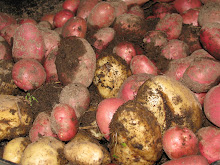
Today, I did the forbidden for a foodie. I visited my local super dupper big box...Superstore and caused a rucus, not intentionally of course. I just asked if they had any produce grown locally, or maybe from BC... in the middle of summer. The poor guy working, gave a me a strange look, and referred me on, the next guy shrugged. I just wanted to know the origin of the lettuce and maybe the peppers, or anything else I could include in my dinner. I was polite. Eventually I was directed to an older guy, who kindly explained with a puzzled look that yes they have some local produce, the lettuce is from the coast, but labelling that is not important, in fact they even have local Okanagan tomatoes next to the Mexican tomatoes, who knew.
Upon further conversation he indicated that he has a BBA (some kind of business degree) which provided the simple explanation for why no local labelling... it went something like "Superstore is a vertical rather than horizontal operation". Now I was puzzled. However, what I gathered he meant was it all boiled down to the quantity that is needed to supply superstore, they don't label, as the local supply is small, patchy and dynamic. It is simply to much to stick a local sign on the tomatoes, when at any moment they could switch to import. But, I mean really, I think they must not think we care. Produce guy pointed out what matters, the price difference and in this case local was cheaper, that is what counts.
The other thing that struck me in my conversation with the produce guy is quality, apparently three strikes and farmer Bob is out, doesn't matter if you are from California or Armstrong, the contract is cancelled for bad quality. Ah yes quality, something Slow Food Nation raves about, my only thought upon looking at the produce section a little closer was what does quality really mean to superstore...
Tuesday, July 14, 2009


Monday, June 15, 2009
Customers Prove There’s a Market for Fresh Produce
By GLENN COLLINS
But will people buy them?
Vegetables, that is. Certainly on Wednesday afternoon, an urgent line formed at a cheery new produce cart that had materialized at the corner of East Fordham Road and Decatur Avenue near Fordham University in the Bronx.
“These strawberries look great, and they’re a bargain,” said Michelle Cruz, a 38-year-old graphic designer who lives nearby and found herself jostling other produce hounds under the cart’s jaunty green umbrellas.
The cart’s debut was the centerpiece of the first public celebration of a new citywide effort to encourage street vendors to bring fresh vegetables and fruit to low-income neighborhoods that have been called “food deserts” because of the predominance of fast-food outlets offering high-fat, high-sugar fare and the dearth of healthful culinary fare.
The city has approved 1,000 new mobile food carts for neighborhoods in the five boroughs that have long been isolated from traditional supermarkets, grocery stores and farmers’ markets offering fresh produce at reasonable prices.
“There is an epidemic of obesity and diabetes among those who are poor,” said Linda I. Gibbs, the deputy mayor for health and human services.
So far, 200 Green Carts, as they are officially called, are now on the streets. “Already, people are telling us they’re glad we’re here,” said Michael Bracho, the 42-year-old proprietor of the Decatur Avenue cart, a downsized former Office Depot manager who describes his new occupation as “lucrative if you do it right.”
Some of the vendors who hit the streets last year complained about low-traffic locations, and it will take a while to determine whether there is enough demand to keep all the vendors in business in neighborhoods where processed foods are dominant. And some local merchants could see the carts as competition.
The carts do not accept food stamps, though a government-financed pilot program will soon provide $1,000 all-weather wireless terminals so 15 vendors can accept food-stamp debit cards.
The cart permits restrict operators to designated impoverished neighborhoods in the five boroughs and limit sales to raw fruits and vegetables.
The plan, approved by the New York City Council and signed into law by the mayor last year, is part of a public-private effort to make healthier food available to the poor while also providing 1,000 new jobs. Many vendors are immigrants from Latin America, Asia and elsewhere, said Karen Karp, a consultant to the project.
In low-income neighborhoods, “we know that it takes more time to build supermarkets,” said Benjamin Thomases, the food-policy coordinator for the Bloomberg administration, “but we can get carts on the streets right now.”
Even if doctors talk to their patients about eating in a more healthy way, “there is little access to these kinds of foods in minority communities,” said Dr. Peter A. Selwyn, a department chairman at Montefiore Medical Center in the Bronx.
“There’s third-rate stuff around here if you can even find it,” said Tom Johnson, a 25-year-old maintenance worker, as he stood amid the frenzy at the cart. “I can buy here now.”
People working two jobs “are not going to get on a train, or two buses, to travel to get fresh vegetables,” said Laurie M. Tisch, president of the Illumination Fund, a charity that has donated $1.5 million over two years to provide capital for Green Cart micro-loans for basic purchases, like the $2,000 food carts, through Acción New York, a nonprofit organization that helps those who do not qualify for bank credit.
But not everyone in the Fordham neighborhood was in a celebratory mood. “It may be good for health, but it’s bad for business,” said George Katehis, manager of the Splendid Deli Restaurant at 387 East Fordham Road. “A guy might buy a piece of fruit there instead of coming in here for a soda.”
Fruits and vegetables were available, but the prices were higher, at the Compare Foods market at East 189th Street and Park Avenue, a few blocks away from the Green Cart. Bananas were 99 cents a pound instead of 50 cents, strawberries were $3.99 a container instead of $1.50 and peppers were $1.89 a pound instead of $1.
“Maybe we’ll lose some customers to them,” said the manager, who gave his name only as Fabio V., adding that his produce cost more because “I have to pay utilities, high rent, employees — and he doesn’t.”
If the avid buyers at Decatur Avenue were any indication, residents of produce-poor neighborhoods may welcome the green-umbrella invasion. “Research has demonstrated that the greater the access, the more the consumption,” said Elliott S. Marcus, an associate commissioner of the city’s health department.
Mr. Marcus, who knows of no similar program in any other city, is hopeful that the Green Carts operation will inspire imitators.
Kumar Gouranga, a 45-year-old immigrant from Bangladesh who for three months has operated a cart at 165th Street and Broadway in Manhattan, said that “business is so good that we are staying open 24 hours a day, seven days a week.”
Mr. Gouranga said his worst problem had been the 15 tickets he had received from the police, despite his legal permit. He said that every ticket had been dismissed in court, but that new ones kept coming.
“My other problem is that the green umbrella you get breaks easily,” he said, “especially in high winds.”
But will people buy them?
Vegetables, that is. Certainly on Wednesday afternoon, an urgent line formed at a cheery new produce cart that had materialized at the corner of East Fordham Road and Decatur Avenue near Fordham University in the Bronx.
“These strawberries look great, and they’re a bargain,” said Michelle Cruz, a 38-year-old graphic designer who lives nearby and found herself jostling other produce hounds under the cart’s jaunty green umbrellas.
The cart’s debut was the centerpiece of the first public celebration of a new citywide effort to encourage street vendors to bring fresh vegetables and fruit to low-income neighborhoods that have been called “food deserts” because of the predominance of fast-food outlets offering high-fat, high-sugar fare and the dearth of healthful culinary fare.
The city has approved 1,000 new mobile food carts for neighborhoods in the five boroughs that have long been isolated from traditional supermarkets, grocery stores and farmers’ markets offering fresh produce at reasonable prices.
“There is an epidemic of obesity and diabetes among those who are poor,” said Linda I. Gibbs, the deputy mayor for health and human services.
So far, 200 Green Carts, as they are officially called, are now on the streets. “Already, people are telling us they’re glad we’re here,” said Michael Bracho, the 42-year-old proprietor of the Decatur Avenue cart, a downsized former Office Depot manager who describes his new occupation as “lucrative if you do it right.”
Some of the vendors who hit the streets last year complained about low-traffic locations, and it will take a while to determine whether there is enough demand to keep all the vendors in business in neighborhoods where processed foods are dominant. And some local merchants could see the carts as competition.
The carts do not accept food stamps, though a government-financed pilot program will soon provide $1,000 all-weather wireless terminals so 15 vendors can accept food-stamp debit cards.
The cart permits restrict operators to designated impoverished neighborhoods in the five boroughs and limit sales to raw fruits and vegetables.
The plan, approved by the New York City Council and signed into law by the mayor last year, is part of a public-private effort to make healthier food available to the poor while also providing 1,000 new jobs. Many vendors are immigrants from Latin America, Asia and elsewhere, said Karen Karp, a consultant to the project.
In low-income neighborhoods, “we know that it takes more time to build supermarkets,” said Benjamin Thomases, the food-policy coordinator for the Bloomberg administration, “but we can get carts on the streets right now.”
Even if doctors talk to their patients about eating in a more healthy way, “there is little access to these kinds of foods in minority communities,” said Dr. Peter A. Selwyn, a department chairman at Montefiore Medical Center in the Bronx.
“There’s third-rate stuff around here if you can even find it,” said Tom Johnson, a 25-year-old maintenance worker, as he stood amid the frenzy at the cart. “I can buy here now.”
People working two jobs “are not going to get on a train, or two buses, to travel to get fresh vegetables,” said Laurie M. Tisch, president of the Illumination Fund, a charity that has donated $1.5 million over two years to provide capital for Green Cart micro-loans for basic purchases, like the $2,000 food carts, through Acción New York, a nonprofit organization that helps those who do not qualify for bank credit.
But not everyone in the Fordham neighborhood was in a celebratory mood. “It may be good for health, but it’s bad for business,” said George Katehis, manager of the Splendid Deli Restaurant at 387 East Fordham Road. “A guy might buy a piece of fruit there instead of coming in here for a soda.”
Fruits and vegetables were available, but the prices were higher, at the Compare Foods market at East 189th Street and Park Avenue, a few blocks away from the Green Cart. Bananas were 99 cents a pound instead of 50 cents, strawberries were $3.99 a container instead of $1.50 and peppers were $1.89 a pound instead of $1.
“Maybe we’ll lose some customers to them,” said the manager, who gave his name only as Fabio V., adding that his produce cost more because “I have to pay utilities, high rent, employees — and he doesn’t.”
If the avid buyers at Decatur Avenue were any indication, residents of produce-poor neighborhoods may welcome the green-umbrella invasion. “Research has demonstrated that the greater the access, the more the consumption,” said Elliott S. Marcus, an associate commissioner of the city’s health department.
Mr. Marcus, who knows of no similar program in any other city, is hopeful that the Green Carts operation will inspire imitators.
Kumar Gouranga, a 45-year-old immigrant from Bangladesh who for three months has operated a cart at 165th Street and Broadway in Manhattan, said that “business is so good that we are staying open 24 hours a day, seven days a week.”
Mr. Gouranga said his worst problem had been the 15 tickets he had received from the police, despite his legal permit. He said that every ticket had been dismissed in court, but that new ones kept coming.
“My other problem is that the green umbrella you get breaks easily,” he said, “especially in high winds.”
Wednesday, May 13, 2009
Urban Hens in Vernon
City moves ahead with pound for livestock
By Richard Rolke - Vernon Morning Star
Published: May 12, 2009 7:00 PM
Urban hens are taking flight in Vernon, but that means officials must handle anyone breaking the law.
On Monday, council instructed staff to determine whether a private contractor is interested in setting up a pound for chickens, rabbits or any other livestock.
“Perhaps a local farmer would take on this responsibility and look after loose cattle,” said Clint Kanester, bylaw enforcement manager.
“It gives us a place where the animals can be cared for before they are disposed of through auction.”
In previous years, staff have had problems with livestock being loose in residential areas and finding someone who would capture the animals and care for them.
“Should council wish to implement an urban hen program, impound regulations and a pound may be required to ensure regulated numbers are maintained,” states a staff report.
Coun. Buffy Baumbrough supports backyard hens as a way of increasing food security among residents, and she also backs establishing a livestock pound.
“If someone is in contravention of the bylaw, what do we do with the hens?” said Baumbrough.
But Coun. Jack Gilroy is concerned that city staff will be running around town checking on animals.
“I want to make sure this isn’t going to create a bylaw nightmare,” he said.
It will cost about $6,000 a year for a livestock pound contract and it’s anticipated that the city will earn about $400 a year in permit fees from 20 properties with four hens each.
In terms of allowing backyard hens, there will be restrictions on where the chicken coop can be located in a yard and in relation to the property lines.
However, that has Coun. Shawn Lee questioning whether a building permit will be required for the coop.
“You’re not just throwing up a bunch of chicken wire. You need a decent building to do it,” he said.
By Richard Rolke - Vernon Morning Star
Published: May 12, 2009 7:00 PM
Urban hens are taking flight in Vernon, but that means officials must handle anyone breaking the law.
On Monday, council instructed staff to determine whether a private contractor is interested in setting up a pound for chickens, rabbits or any other livestock.
“Perhaps a local farmer would take on this responsibility and look after loose cattle,” said Clint Kanester, bylaw enforcement manager.
“It gives us a place where the animals can be cared for before they are disposed of through auction.”
In previous years, staff have had problems with livestock being loose in residential areas and finding someone who would capture the animals and care for them.
“Should council wish to implement an urban hen program, impound regulations and a pound may be required to ensure regulated numbers are maintained,” states a staff report.
Coun. Buffy Baumbrough supports backyard hens as a way of increasing food security among residents, and she also backs establishing a livestock pound.
“If someone is in contravention of the bylaw, what do we do with the hens?” said Baumbrough.
But Coun. Jack Gilroy is concerned that city staff will be running around town checking on animals.
“I want to make sure this isn’t going to create a bylaw nightmare,” he said.
It will cost about $6,000 a year for a livestock pound contract and it’s anticipated that the city will earn about $400 a year in permit fees from 20 properties with four hens each.
In terms of allowing backyard hens, there will be restrictions on where the chicken coop can be located in a yard and in relation to the property lines.
However, that has Coun. Shawn Lee questioning whether a building permit will be required for the coop.
“You’re not just throwing up a bunch of chicken wire. You need a decent building to do it,” he said.
Tuesday, May 12, 2009
Food Talk in the BC Election 2009
It is the eve of a new provincial government in BC and I am reflecting on the last 28 days of campaigning. My electoral area, Shuswap-Monashee saw some interesting topics debated, the first all candidates meeting was organized by the Food Action Society of the North Okanagan. Food is a strong topic here as a core agriculture area in BC. The meat regulations was interestingly the one topic that all candidates supported some kind of reform/review, but that was about it. The liberal candidate generally dismissed food issues, and confirmed he would not support core funding for food intitiatives. The NDP candidate was supportive of many questions, but I was so disappointed in his knowledge of most issues, he just did not know. The conservative candidate was generally against spending any money on anything, (ok predictable), but again really didn't know the food issues. The green candidate, is a well known food advocate and outspoken community leader, she spoke well on the issues overall in particular around meat regulations, funding for core local programs, and the links between food and climate change. But none of them were able to speak to the issues that linked poverty and food access.
At this moment, an ex. liberal MLA is discussing food/agriculture on cbc radio, she discussed the agricultural plan as an amazing achievement by the liberals. Hah, our liberal candidate stated he would not increase funding for the Ministry of Agriculture, it is the lowest by far in funding across Canada, and according to people within the Ministry (pers. comm.) there is no way they can implement many of the objectives of this plan, since they have no money for any of their programs.
Only a few hours till we know the fate of the next four years, but despite the outcome of the election we can all still focus on working in our communities, supporting our farmers, and working for change.
At this moment, an ex. liberal MLA is discussing food/agriculture on cbc radio, she discussed the agricultural plan as an amazing achievement by the liberals. Hah, our liberal candidate stated he would not increase funding for the Ministry of Agriculture, it is the lowest by far in funding across Canada, and according to people within the Ministry (pers. comm.) there is no way they can implement many of the objectives of this plan, since they have no money for any of their programs.
Only a few hours till we know the fate of the next four years, but despite the outcome of the election we can all still focus on working in our communities, supporting our farmers, and working for change.
Thursday, April 30, 2009
Launch of Community Food Mapping Initiative in the North Okanagan
Food Action Society of the North Okanagan and the Centre for Social, Spatial and Economic Justice at UBC-Okanagan, launch an exciting regional food project. We are looking for community volunteers to help in developing the map and in showcasing our local food growers, producers, markets and community food projects.
We want to tell the story of our regions food and build a valuable community resource to help in building a strong regional food system. Come learn about the project and share your ideas around local food in your neighborhood.
Where: People's Place, Rm 001, 3402 27 Ave, downtown Vernon
When: Wednesday, May 13th 7pm
We want to tell the story of our regions food and build a valuable community resource to help in building a strong regional food system. Come learn about the project and share your ideas around local food in your neighborhood.
Where: People's Place, Rm 001, 3402 27 Ave, downtown Vernon
When: Wednesday, May 13th 7pm
Monday, April 27, 2009
Swine Flu linked to Mexico's Industrial Agricutlure
After the announcement today that British Columbia has confirmed cases of Swine Flu, this came to me via a US community food security list serve I subscribe too. 68 people have now died in Mexico and it has spread into California, Texas, and yes, BC.
Please read below.
According to the swine flu time-line put together by a company called Veratect, who evidently map infection disease events for clients like the WHO & CDC:
"Residents [of La Gloria, Perote Municipality, Veracruz State, Mexico] believed the outbreak had been caused by contamination from pig breeding farms located in the area. They believed that the farms, operated by Granjas Carroll, polluted the atmosphere and local water bodies, which in turn led to the disease outbreak. According to residents, the company denied
responsibility for the outbreak and attributed the cases to 'flu.' However, a municipal health official stated that preliminary investigations indicated that the disease vector was a type of fly that reproduces in pig waste and that the outbreak was linked to the pig farms. It was unclear whether health officials had identified a suspected pathogen responsible for this
outbreak." (1)
Granjas Carroll is a subsidiary of Smithfield Foods. According to the Smithfield Foods website, Granjas Carroll produced 950,000 hogs in fiscal 2008. (2)
So now it is possible that our Global Industrial Food System is responsible for unleashing a deadly pandemic, somehow I am not surprised nor do I think it is the first time...
Please read below.
According to the swine flu time-line put together by a company called Veratect, who evidently map infection disease events for clients like the WHO & CDC:
"Residents [of La Gloria, Perote Municipality, Veracruz State, Mexico] believed the outbreak had been caused by contamination from pig breeding farms located in the area. They believed that the farms, operated by Granjas Carroll, polluted the atmosphere and local water bodies, which in turn led to the disease outbreak. According to residents, the company denied
responsibility for the outbreak and attributed the cases to 'flu.' However, a municipal health official stated that preliminary investigations indicated that the disease vector was a type of fly that reproduces in pig waste and that the outbreak was linked to the pig farms. It was unclear whether health officials had identified a suspected pathogen responsible for this
outbreak." (1)
Granjas Carroll is a subsidiary of Smithfield Foods. According to the Smithfield Foods website, Granjas Carroll produced 950,000 hogs in fiscal 2008. (2)
So now it is possible that our Global Industrial Food System is responsible for unleashing a deadly pandemic, somehow I am not surprised nor do I think it is the first time...
Subscribe to:
Posts (Atom)